
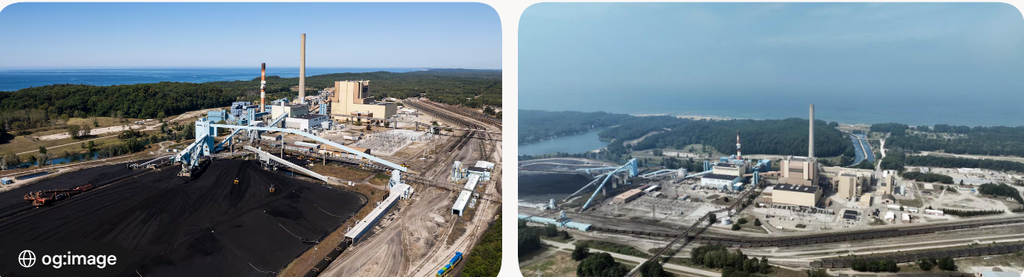
The Trump administration’s Department of Energy, under Secretary Chris Wright, has once again stepped up to protect the electric grid. Late last week, the DOE issued its seventh emergency order keeping the J.H. Campbell Generating Plant in West Olive, Michigan (near Grand Rapids) online past its original May 2025 retirement date. The latest 90-day order runs through mid-February 2027.
This is common-sense energy policy. The 64-year-old, roughly 1.5-gigawatt coal plant supplies reliable baseload power that keeps the lights on in the Midwest when demand spikes. The administration is acting under Section 202(c) of the Federal Power Act and the national energy emergency declared by President Trump on day one, driven by surging demand from AI data centers, manufacturing, and the consequences of years of premature plant retirements under prior policies.
The Court Fight and Why DOE Is Right to Press Ahead
On September 11, 2026, a three-judge panel of the U.S. Court of Appeals for the D.C. Circuit (Judges Cornelia Pillard, Sri Srinivasan, and Robert Wilkins) vacated the original May 2025 order. The panel, all Obama appointees, ruled that DOE exceeded its authority because Section 202(c) is only a narrow “last-resort backstop” for immediate emergencies, not longer-term reliability needs. Environmental groups and the Democratic attorneys general of Michigan, Illinois, and Minnesota had challenged the orders.
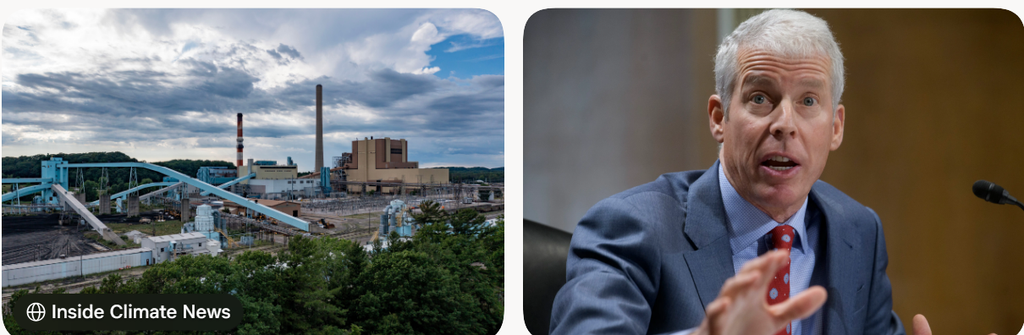
The DOE disagrees and has petitioned for a full-court (en banc) rehearing. In the meantime, it is correctly continuing to issue orders that protect customers. Secretary Wright has been clear: “President Trump and the Energy Department remain committed to doing everything in our power to stop power outages for American families and businesses. Ensuring coal plants such as the Campbell Plant are available to operate has prevented blackouts and likely saved lives. Americans deserve access to affordable, reliable, and secure electricity regardless of whether the wind is blowing or the sun is shining.”
Critics, including the Sierra Club and Environmental Defense Fund, call the extensions “illegal” and expensive. They point to costs in the range of $300 million so far that Consumers Energy (the plant owner) is seeking to recover through rates. Those numbers are real, but they must be weighed against the far higher costs of blackouts—lost economic output, spoiled goods, health risks during extreme weather, and damage to industrial and data-center operations. A NERC official has noted that the DOE’s emergency orders have, in aggregate, helped reliability.
The plant itself has delivered when needed. During a severe winter stretch in late January–early February 2026, it ran above 650 MW every day—power for hundreds of thousands of homes—while coal generation in affected regions rose sharply.
Broader Context: Energy Abundance Over Ideology
This is not an isolated action. The Trump administration has used similar emergency authorities to keep multiple coal plants (and one oil/gas facility) operating across several states, including units in Washington, Colorado, Indiana, and elsewhere. In 2025 alone, more than 17 gigawatts of coal-fired capacity were saved from premature retirement. The White House has also advanced roughly $700 million in support for coal plants and exports, while EPA Administrator Lee Zeldin has moved to reverse earlier greenhouse-gas limits on coal and gas plants.
Rising electricity demand from data centers and AI is real and accelerating. Intermittent wind and solar cannot provide the firm, dispatchable power needed for 24/7 reliability, especially in extreme cold or heat. Premature coal retirements under the previous administration left the grid thinner; the Trump team is reversing that dangerous trajectory.
Environmental activists and some state officials prioritize shutdown timelines and emissions metrics over keeping the lights on. The administration is prioritizing American energy security, industrial competitiveness, and affordable power for working families. While the narrow panel ruling is a temporary setback that will be appealed, the DOE is doing exactly what voters elected President Trump to do: unleash American energy and refuse to let ideology create blackouts.
The J.H. Campbell plant, Consumers Energy, the Midwest grid, and the American people are better off with reliable coal generation available. That is the practical, America-first approach.
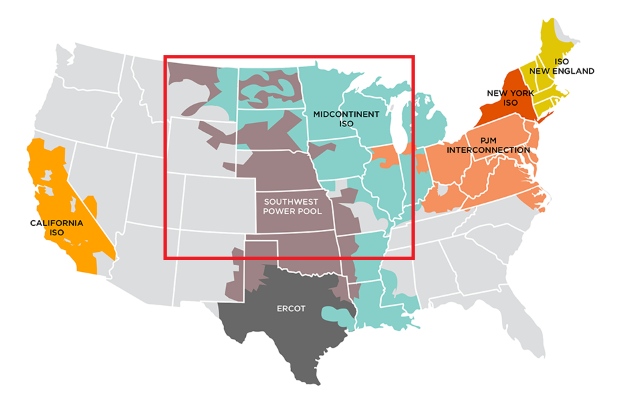
Recent performance and the Campbell plant: During the Winter 2026 Arctic cold period (including Winter Storm Fern), MISO issued energy emergency alerts. The J.H. Campbell plant (Consumers Energy’s last major coal facility, ~1.4–1.5 GW) generated significant power—over 200,000 MWh in a key multi-day stretch—and helped avoid shortfalls. The DOE has repeatedly ordered it to remain available (the latest 90-day order runs through mid-February 2027), citing persistent emergency conditions, rising demand, and the value of dispatchable resources.
Michigan has retired substantial coal capacity since 2020 (~2,700 MW per EIA data in DOE orders). The Palisades nuclear plant (closed in 2022) is targeted for restart around 2027. Large-load (data center) interconnection rules are being tightened, and MISO’s Reliability Imperative framework focuses on market reforms, better forecasting, transmission expansion, and operational tools.