
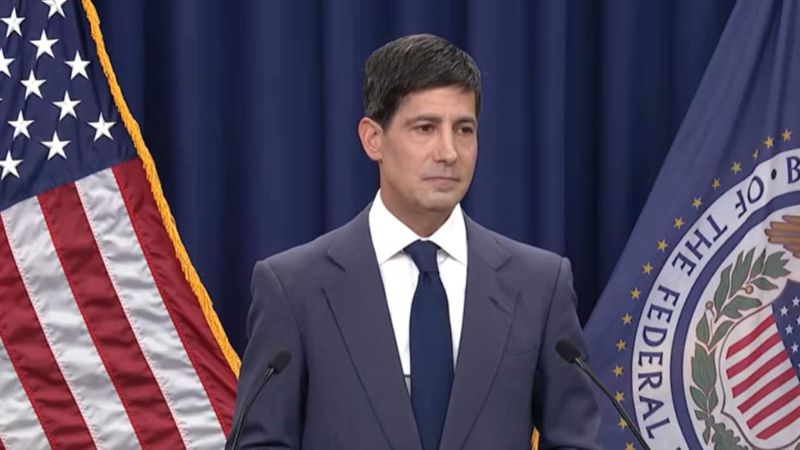
On Wednesday, September 16, 2026, Federal Reserve Chairman Kevin Warsh and a unanimous Federal Open Market Committee raised the federal funds rate by 25 basis points to a target range of 3.75–4.00 percent. It was the first increase since July 2023.
The move was not a surprise after hotter inflation data and Warsh’s own Jackson Hole remarks. What matters is what it signals: after years of inflation running above the 2 percent target, the central bank is choosing discipline over accommodation. That is good news for savers, workers, businesses that plan for the long term, and the credibility of the dollar.

Warsh put it plainly: “The plain fact is that inflation is too high and has been for too long.” He added that the Committee “will deliver price stability.”
Inflation Is a Tax—Especially on Those Who Work and Save
Inflation is not a statistical abstraction. It is a quiet transfer of wealth from people who earn wages, hold cash, and live on fixed incomes to debtors and those closest to newly created money. For more than five years, prices have risen faster than the Fed’s target. Working families feel it at the grocery store and the gas pump. Retirees watch purchasing power erode. Savers earn negative real returns after taxes.
A modest tightening does not crush the economy. It begins to restore the incentive to save rather than borrow and speculate. Higher short-term rates make holding cash and short-term Treasuries slightly more attractive. That is a feature, not a bug. Sound money rewards thrift.
The Fed itself described financial conditions as insufficiently restrictive. Warsh said he would be “hard-pressed to describe broad financial conditions as restrictive,” so the Committee “removed a dose of accommodation.” That is the language of prudence.
The Economy Can Handle It—and Is Stronger Than the Pessimists Claim
Critics treat every rate increase as an attack on growth. The data say otherwise. Economic activity is expanding at a solid pace. Productivity growth is strong. Capital investment is robust. Job gains have kept pace with the workforce. The unemployment rate sits near 4.1 percent.
The Committee’s own projections see real GDP growing 2.3 percent this year and 2.4 percent next year, with unemployment holding steady. Inflation is expected to remain elevated in 2026 before declining. The labor market is not on the brink. Hours worked and job openings have been rising. Credit continues to flow, especially to businesses.
This is not a fragile recovery that will shatter at the first 25-basis-point move. It is an economy showing resilience amid geopolitical uncertainty, including energy-price effects from conflict in the Middle East. Stronger productivity—helped by capital spending and technology—gives the Fed room to prioritize price stability without immediately sacrificing jobs.

Why aren’t Americans filling the manufacturing jobs we already have?
American manufacturing and investment benefit when prices become more predictable. Firms can plan multi-year projects instead of constantly repricing inputs. Workers see more of their wage gains stick in real terms rather than being eaten by the next round of price increases.
Independence and Credibility Matter More Than Short-Term Political Convenience
Chairman Warsh was appointed by President Trump. That fact makes today’s unanimous decision more significant, not less. The Fed chose the data and its statutory mandate over political pressure for cheaper money. Markets and households notice when the central bank is willing to act even when it is inconvenient.
A central bank that always delivers lower rates on demand loses the ability to anchor inflation expectations. Once those expectations unmoor, the cost of bringing inflation down later becomes far higher—in lost output and higher unemployment. A small, timely hike now is cheaper than a large, delayed one later.
The dollar remains the world’s reserve currency in part because investors believe U.S. institutions will eventually prioritize stability. Restoring that belief supports capital inflows, keeps long-term borrowing costs from rising more than necessary, and benefits American households through a stronger currency and cheaper imported goods over time.
What a Small Hike Actually Does
- It signals that the 2 percent inflation goal is not optional.
- It slightly cools demand at the margin without slamming the brakes.
- It improves the real return for savers and money-market funds.
- It encourages businesses to invest on the basis of productivity rather than cheap leverage.
- It reduces the risk that relative price shocks (energy, commodities) embed themselves in broader inflation expectations.
None of this is painless for borrowers. Mortgage rates and credit-card APRs will feel the difference. But the alternative—letting inflation persist—imposes a broader, less visible tax on everyone who does not live off floating-rate debt.
Watch the Chairman Explain the Decision
The official press conference is the best primary source. Warsh kept it relatively short and focused on the dual mandate.
- CNBC: Chairman Kevin Warsh speaks after the rate decision
- Associated Press live coverage
- Federal Reserve short clip and materials: FOMC press conference page

Looking Ahead
Most officials expect at least one more modest increase this year. That is not a declaration of war on growth. It is an attempt to finish the job of bringing inflation down on a timely basis while the labor market remains healthy. The median projection has the funds rate around 4.1 percent at year-end and holding there in 2027.
Americans do not need perpetual cheap money. They need a currency that holds its value, an economy that rewards work and saving, and institutions willing to tell the truth about trade-offs. Today’s 25-basis-point step is a small but serious move in that direction.
The marble building on Constitution Avenue does not exist to fine-tune the next quarter’s GDP print. It exists to deliver price stability so that private citizens and businesses can plan their own lives. Chairman Warsh and the Committee took a step toward that duty. That is worth defending.