

In a time when some voices on the left try to smear capitalism as exploitative or outdated, the facts tell a different story. The United States rose from a fledgling republic to the world’s dominant economic superpower through one core system: capitalism — private property, voluntary exchange, profit as a signal of value created, and competition that rewards innovation and punishes waste.
This system didn’t just make a few people rich. It created unprecedented abundance that raised living standards for the vast majority of Americans and served as a beacon for the world.
The Historical Miracle: From Agrarian Roots to Industrial Powerhouse
America’s capitalist engine began firing early. The Constitution protected property rights and contracts. The industrial revolution turned a nation of farmers into a manufacturing colossus. Factories, railroads, steel mills, and assembly lines transformed raw materials and human ingenuity into wealth on a scale never seen before.
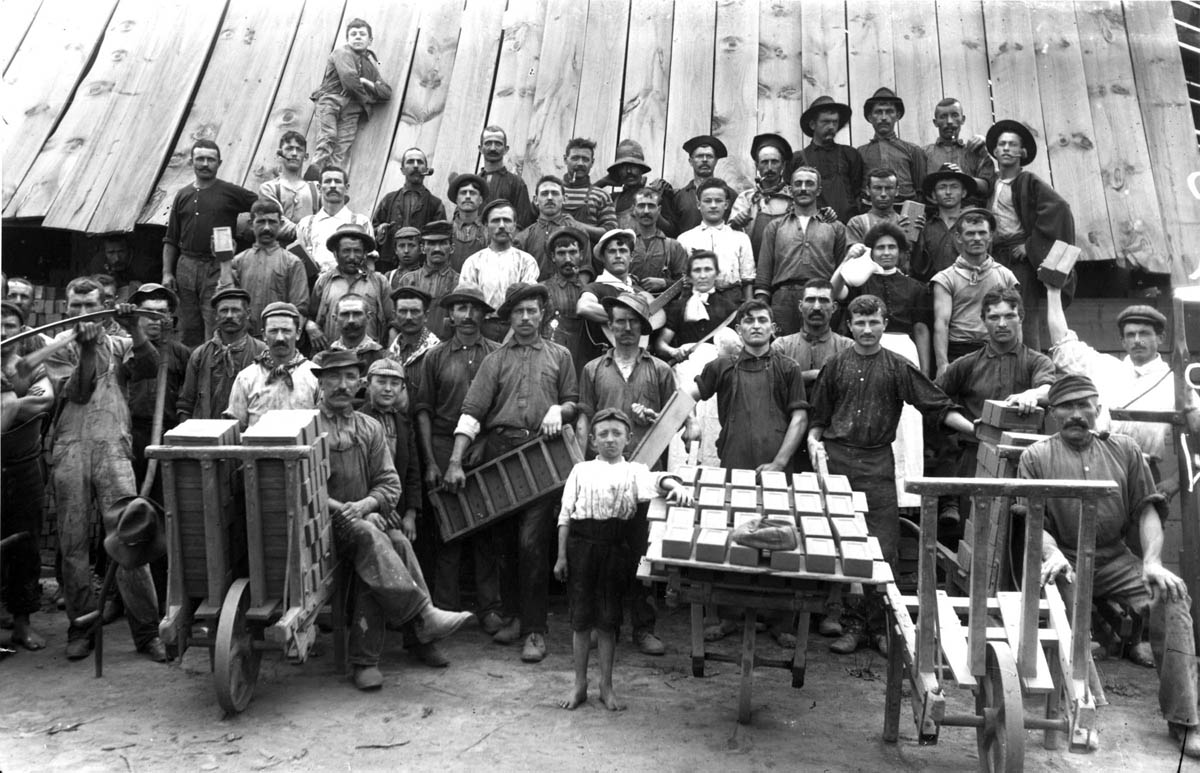
From Depression to Expansion: Industrial Capitalism Triumphs at Home and Abroad, 1893-1900 | Who Built America? Working People and the Nation’s History | Who Built America?
By the late 19th and early 20th centuries, American capitalism was delivering goods and opportunities that previous generations could only dream of. Henry Ford didn’t just build cars — he made them affordable for working people through efficiency and the profit motive. This pattern repeated across industries.
Hard Data: Capitalism’s Track Record on Prosperity and Poverty Reduction
The numbers are undeniable. America’s capitalist economy produces roughly a quarter of global GDP with under 5% of the world’s population. Real median household income and living standards have soared over decades. Consumer goods that were luxuries in 1950 — cars, refrigerators, televisions, smartphones, air conditioning — are now commonplace.
Most importantly, capitalism attacks poverty at its root by creating wealth rather than merely redistributing it.
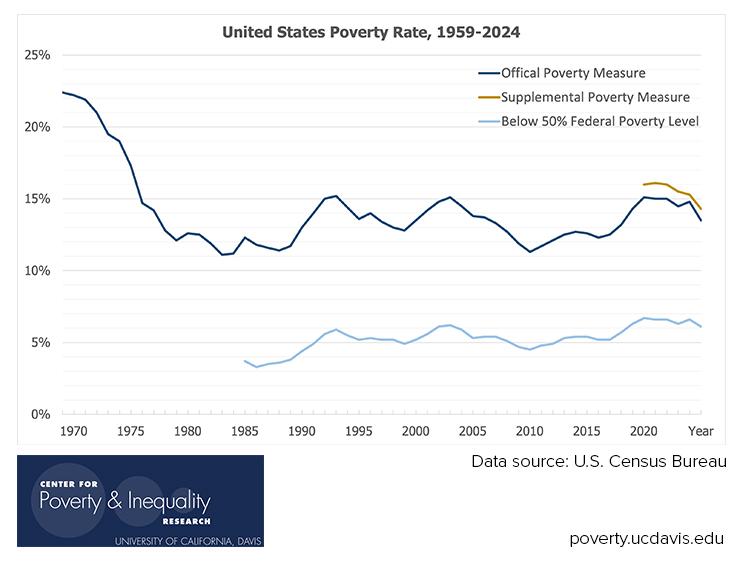
Look at the long-term trend in U.S. poverty rates. Dramatic declines occurred as the economy grew through market-driven innovation and job creation. The sharpest improvements in living standards for the bottom half of society happened when capitalism was least fettered by expansive government programs. Even after trillions spent on anti-poverty initiatives, the official rate hovers in the low double digits, and behavioral metrics — family structure, workforce participation, and multi-generational mobility — tell a more sobering story.
Innovation Capital: Why America Leads the World
Capitalism doesn’t just produce more stuff — it produces better stuff through relentless innovation. Risk-takers, inventors, and entrepreneurs pour capital into ideas that consumers actually want. The result? The internet, personal computers, modern medicine, GPS, smartphones, and countless other breakthroughs that originated or scaled massively in the United States.

Silicon Valley and the broader tech ecosystem didn’t emerge from government five-year plans. They emerged from venture capital, stock options, property rights, and the freedom to fail — and try again. Every major leap in American living standards traces back to someone who saw a profit opportunity in serving others better than the competition.
The Counterfeit: How Big Government and Democratic Policies Foster Freeloaders and Political Grift
Capitalism’s success creates the wealth that funds safety nets. A compassionate society should help the truly vulnerable — the elderly, disabled, and children in genuine need. But that’s not what the modern welfare state has become.
Since the Great Society programs of the 1960s, Democratic administrations and Congresses have dramatically expanded means-tested entitlements, Medicaid, food stamps (SNAP), housing subsidies, and refundable tax credits. The philosophy shifted from temporary help to permanent support systems that too often penalize work, marriage, and self-improvement.

Entitlements now dominate federal spending growth. This isn’t compassion — it’s a system that creates freeloaders: able-bodied adults who cycle through programs without serious efforts to exit them. Work requirements have proven effective at moving people into self-sufficiency, yet they are routinely opposed or watered down by Democratic leaders who benefit politically from larger dependent constituencies.
It also breeds grifters at the political level. Promising “free” college, “free” healthcare, guaranteed income pilots, or debt cancellation is an easy vote-buying strategy. The costs are shifted to taxpayers, businesses, and future generations via debt and inflation. The bureaucracy grows, lobbyists profit, and politicians secure reliable voting blocs. This is clientelism dressed up as social justice.
The data shows trillions spent on the “War on Poverty” with disappointing results in family stability and workforce attachment. Capitalism rewards productivity. The welfare state, as currently structured, often subsidizes its absence. Both parties have expanded spending in tough times, but the consistent ideological push for larger, more permanent redistribution comes from the Democratic side.
Capitalism Is Moral — and Effective
Capitalism aligns incentives with reality. You succeed by creating value others voluntarily pay for. It is voluntary, decentralized, and dynamic. It has lifted more people out of poverty globally than any other system in human history — and America has been the leading example.
Socialist and heavily interventionist alternatives have produced shortages, stagnation, and authoritarianism wherever tried at scale. America’s mixed economy works best when the capitalist core remains strong and government stays limited to genuine public goods and a true safety net — not an engine of dependency.
The Path Forward
To preserve what made America great, we must:
- Defend free markets, low taxes, and reasonable regulation.
- Reform welfare to emphasize work, time limits, and personal responsibility.
- Reduce the crushing national debt that crowds out private investment.
- Reject the politics of envy and the false promise that government can engineer equal outcomes.
Capitalism isn’t perfect — no human system is. But it remains the greatest engine of human flourishing ever devised. The United States proved it. The choice now is whether we double down on what works or continue down the road of dependency and political grift.